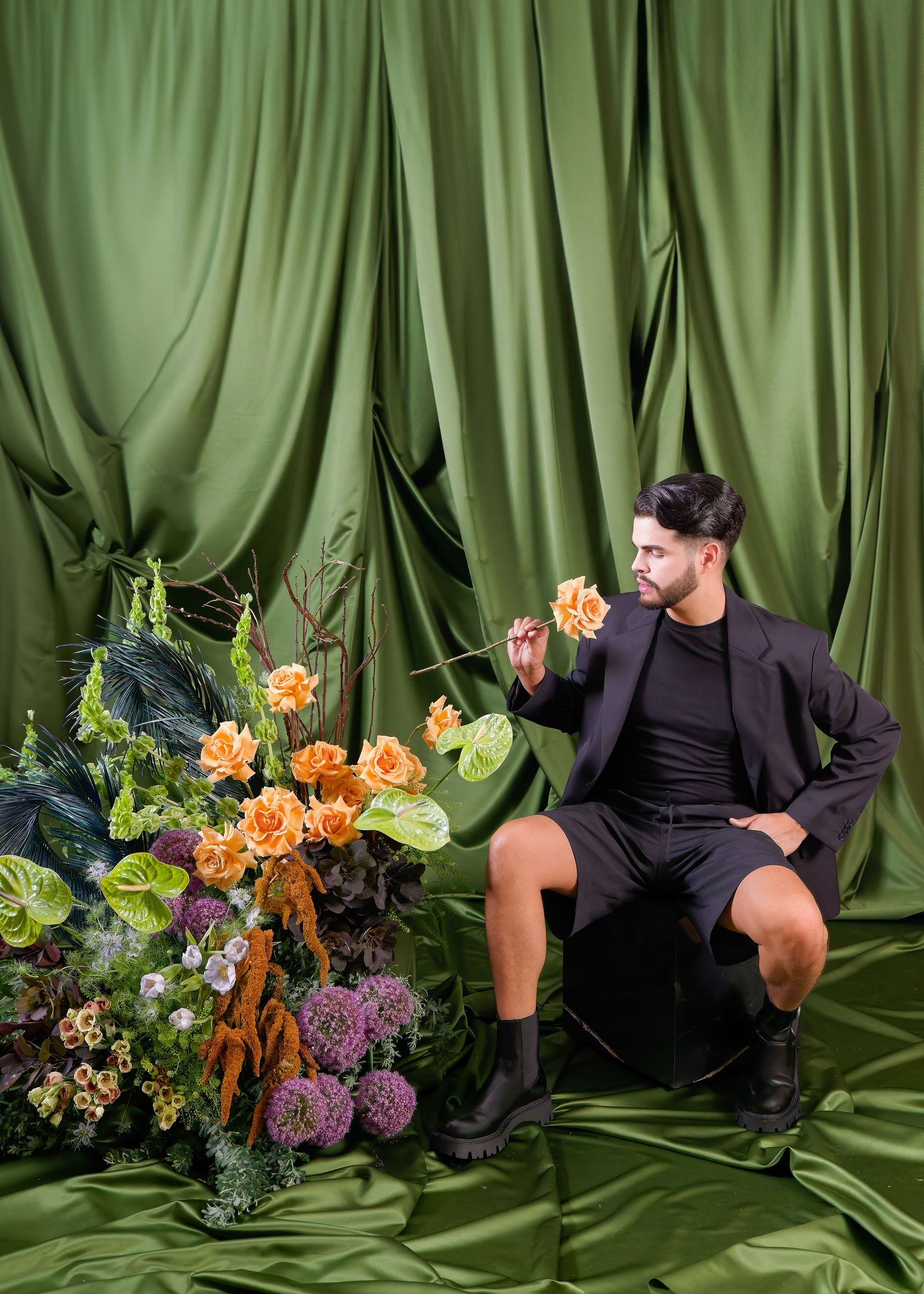
This editorial fashion portrait series was photographed for The Scout Guide Orlando using layered green drapery as the primary backdrop element. The final images were intended to have strong vertical compositions, creating a more immersive and dramatic presentation for both the individual portraits and the group image.
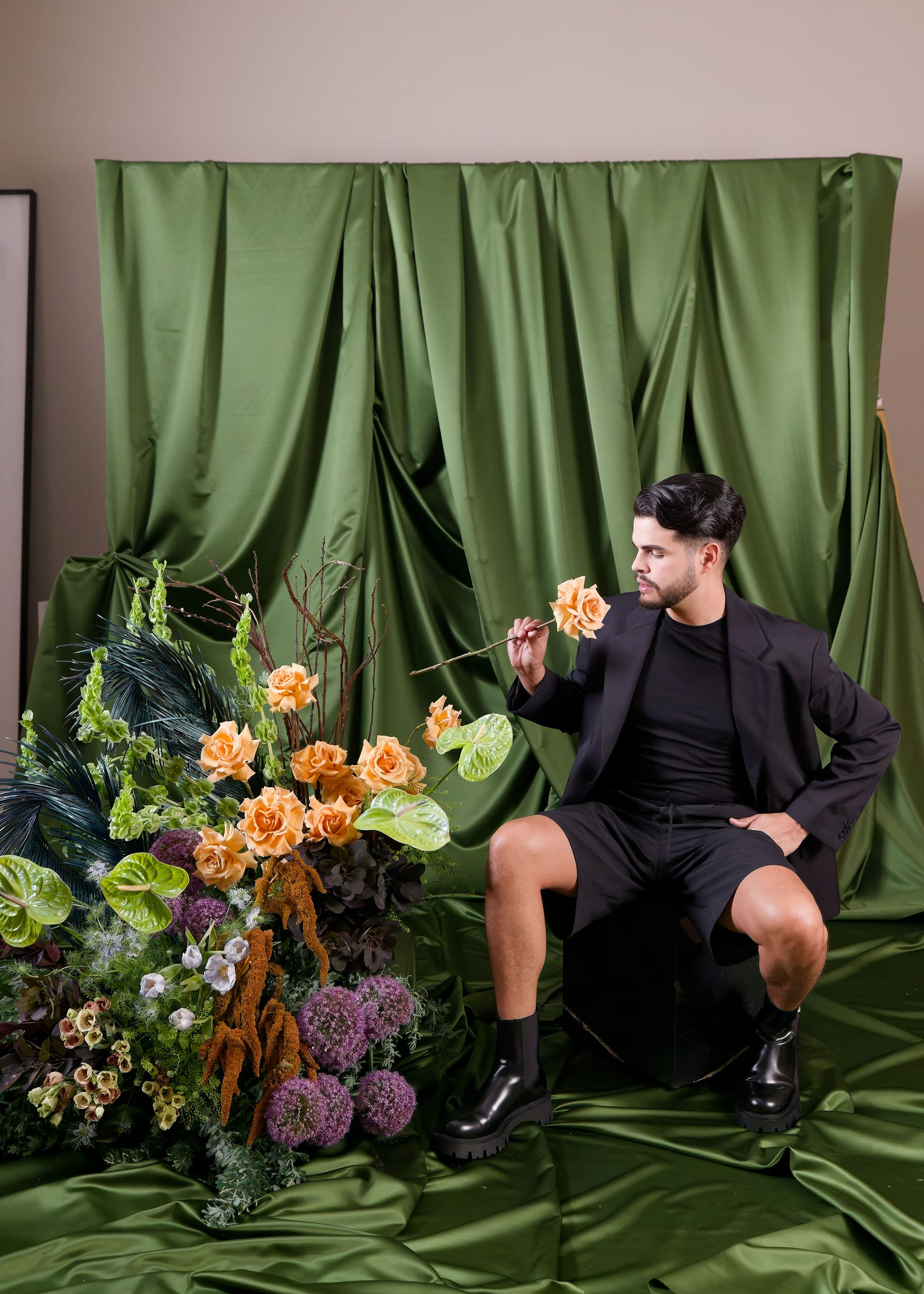
However, during the shoot, the physical drapery itself was not tall enough to fully accommodate the intended crop and framing across all three final photographs — the group portrait as well as an individual portrait for each model. Because of this, each image required a custom backdrop extension while still preserving the realism and natural movement of the hanging fabric.
What initially appears to be a relatively simple background extension became significantly more complex because the drapery remained fully visible throughout the compositions without obstruction from furniture, walls, or environmental elements.
Every fold, shadow, highlight, and directional pull within the fabric needed to remain physically believable.
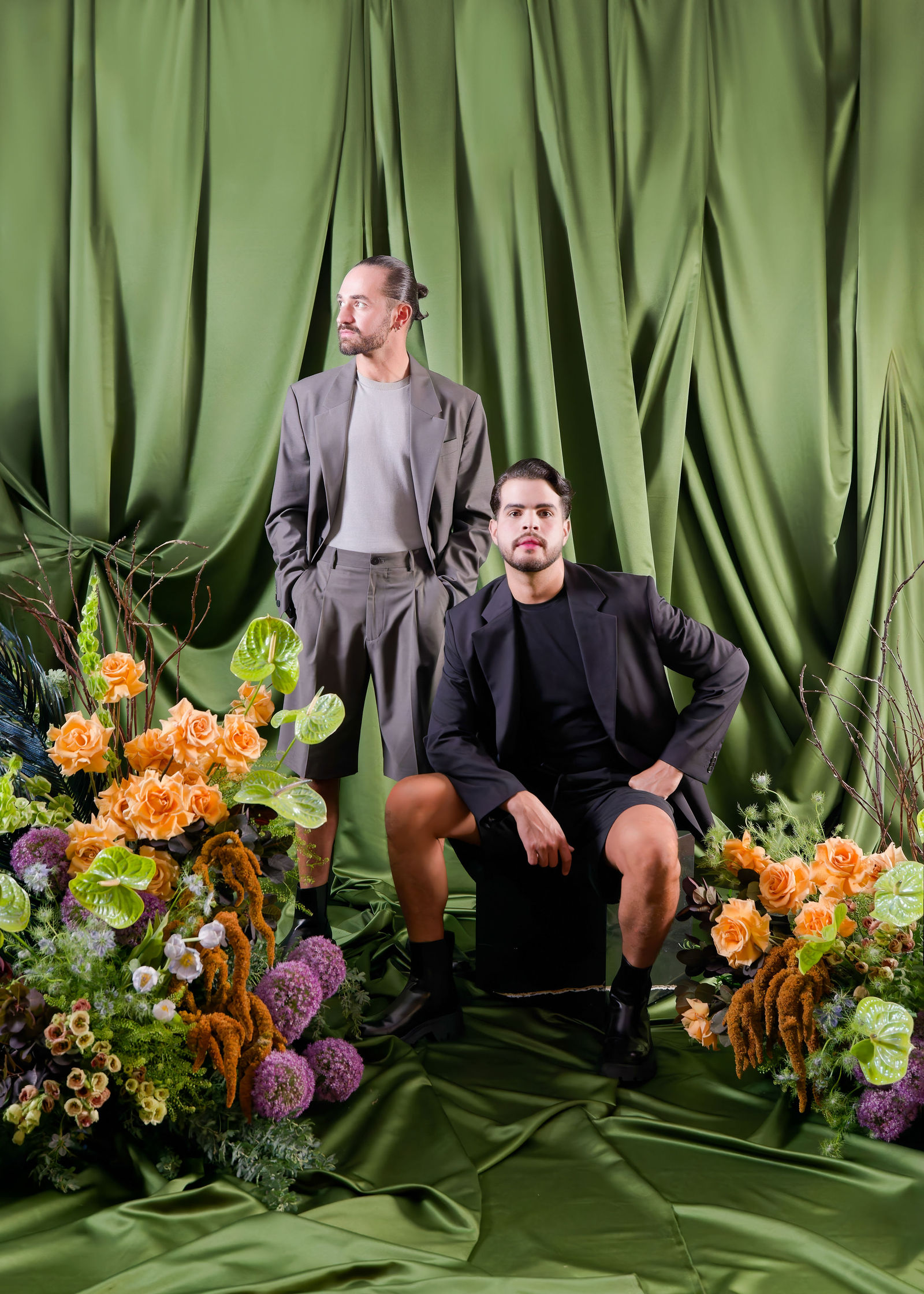
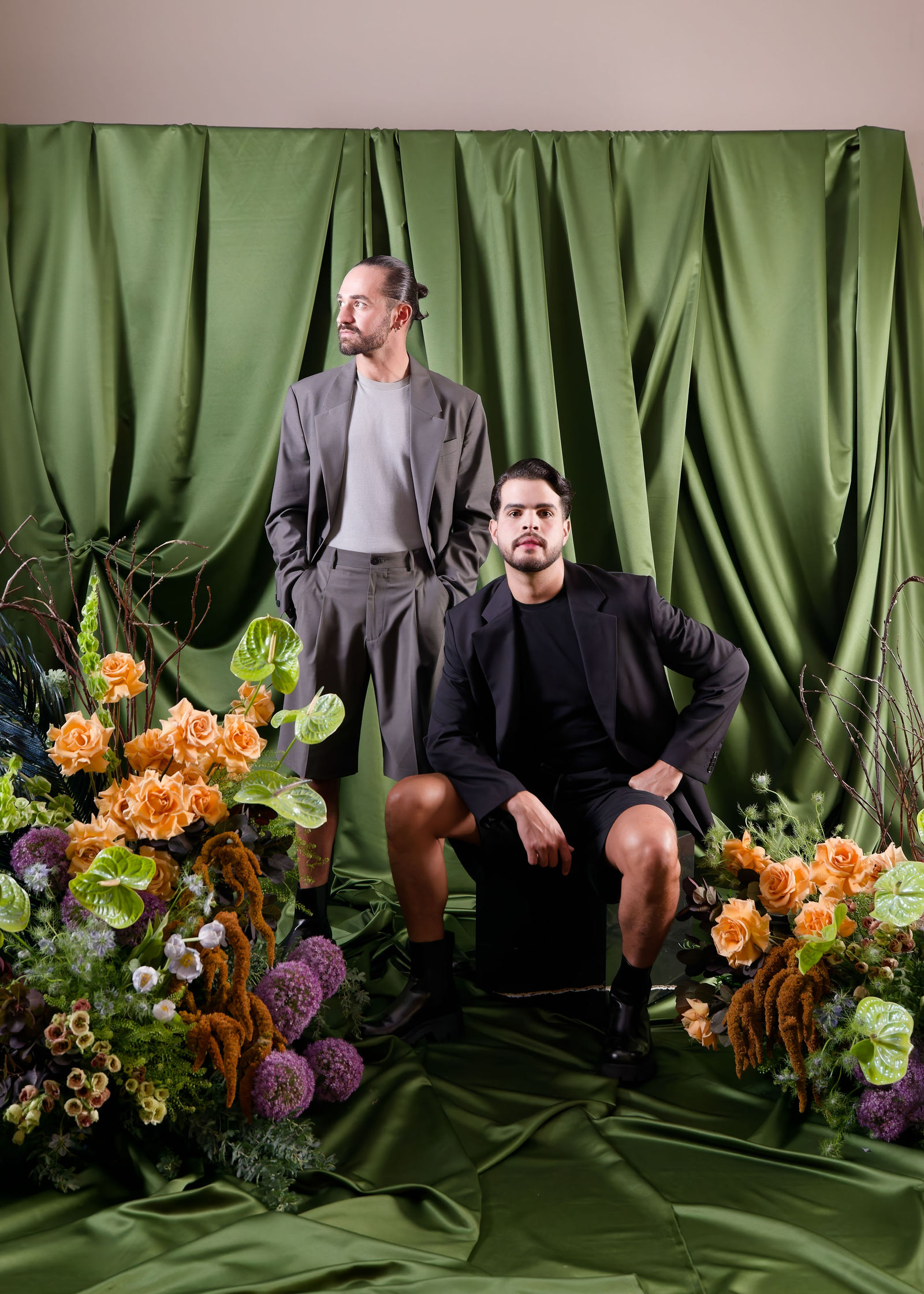
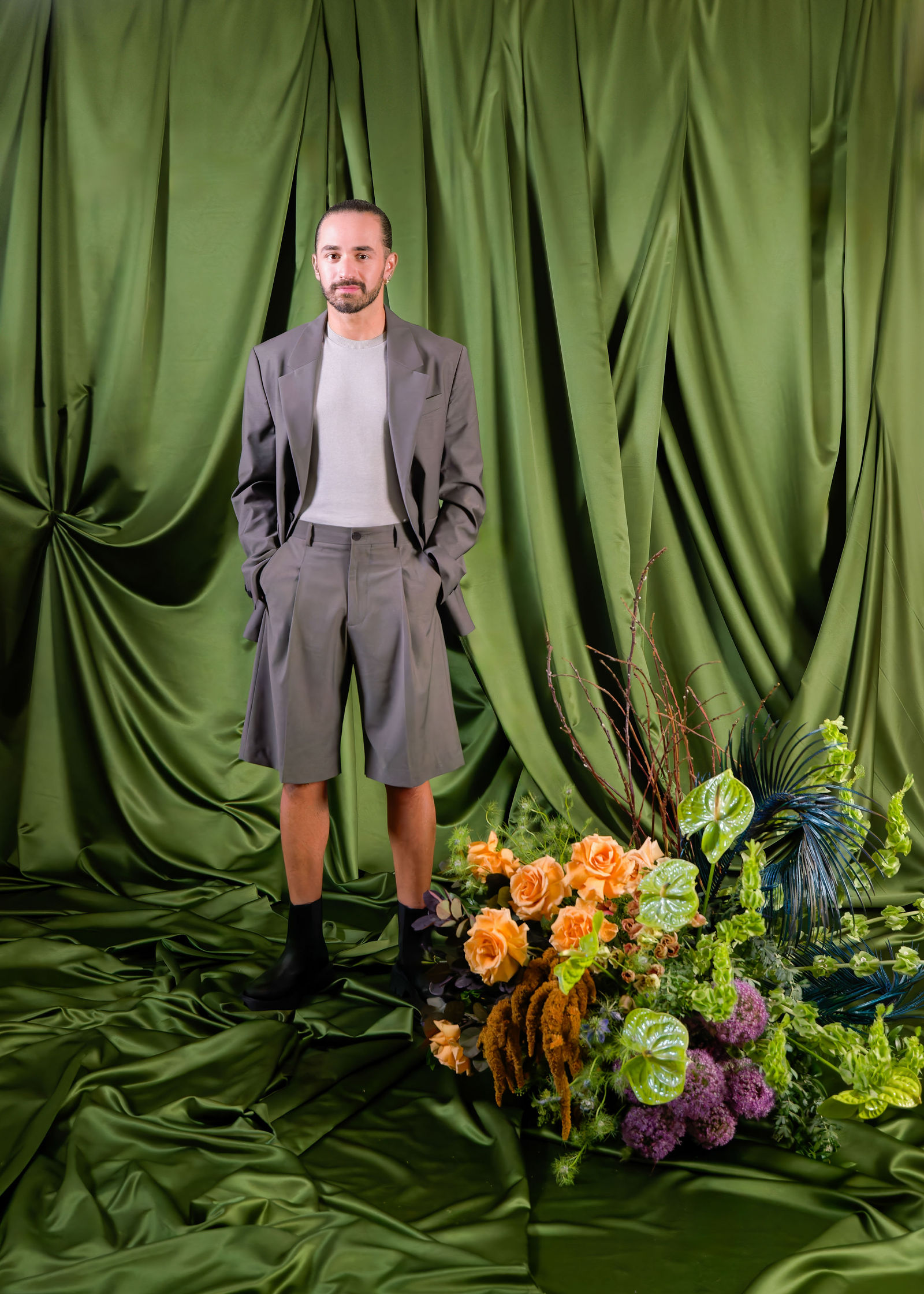
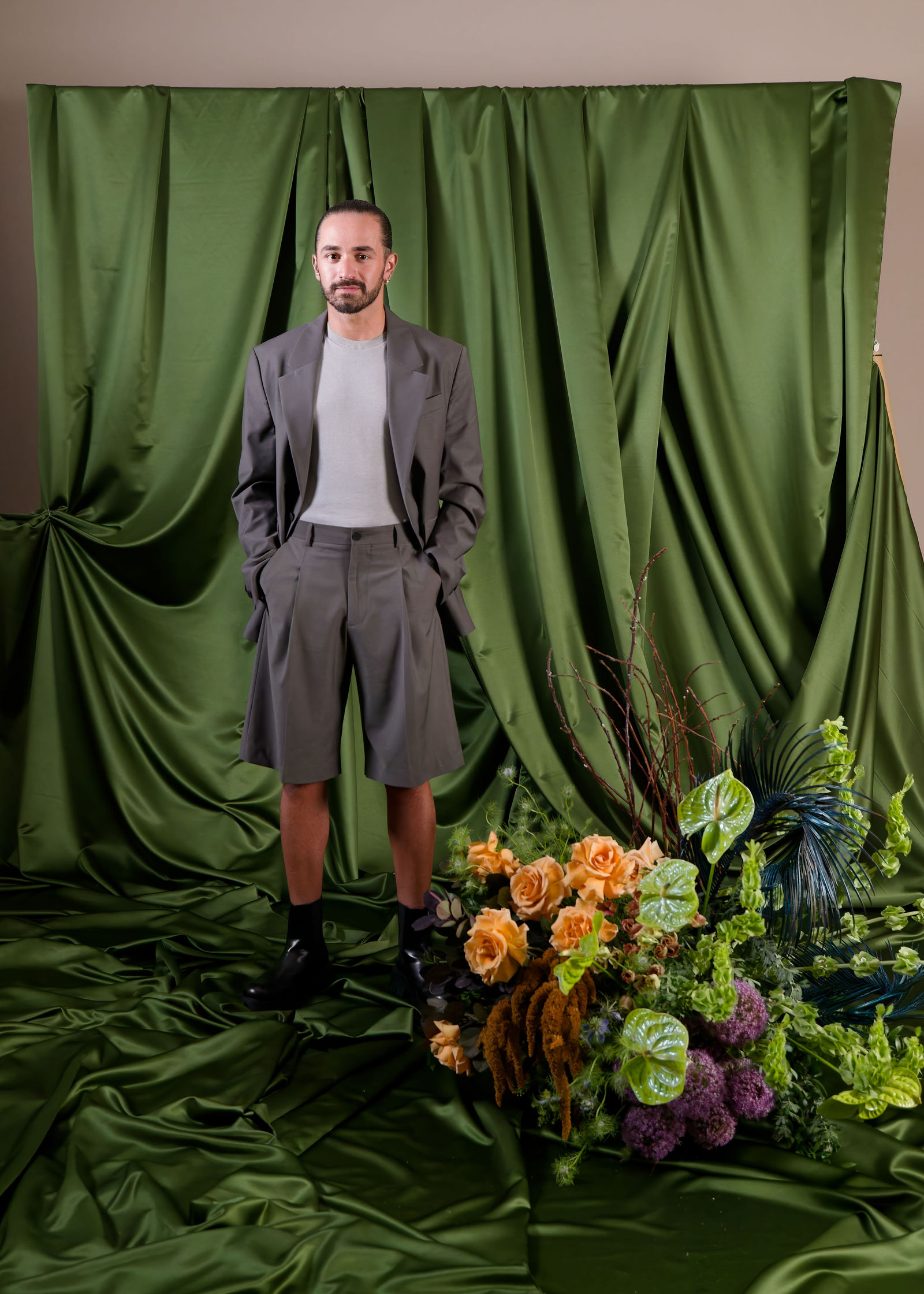
challenge
The primary challenge in this portrait series was reconstructing the missing portions of the fabric backdrop while maintaining realistic drapery behavior and fold continuity throughout each image.
Unlike flatter studio backdrops or seamless paper, fabric naturally creates highly irregular folds, tension points, and shadow transitions that the eye recognizes very quickly. Because the drapery occupied nearly the entire background of all three compositions, even small inconsistencies in the extension would have immediately revealed the retouch.
The folds within the fabric varied in width, direction, compression, and lighting depending on how the material was hanging and pooling throughout the set. Simply cloning upward or mirroring sections of fabric would have created repetitive patterns and unrealistic tension within the drapery.
The extension needed to preserve the natural gravity, weight, and movement of the fabric so the backdrop still felt physically present within the studio environment.
approach
To rebuild the missing portions of the backdrop, I worked by sampling and reconstructing existing sections of the drapery while carefully preserving the natural rhythm and flow of the fabric folds.
Rather than repeating identical sections, I rebuilt the extension in smaller areas to maintain variation in the drapery and avoid obvious duplication patterns. Particular attention was paid to preserving the directional pull of the folds and the way highlights and shadows transitioned throughout the material.
Because the fabric remained fully exposed behind the subjects across all three images, the reconstruction needed to maintain believable tension and spacing throughout the entire backdrop so the eye would continue reading the drapery as naturally hanging fabric rather than digitally extended material.
Additional tonal balancing and cleanup work were then completed to unify the backdrop and maintain consistency throughout the portrait series.
techniques
- Fabric backdrop extension
- Drapery fold reconstruction
- Tonal and shadow continuity matching
- Clone Stamp and Healing Brush work
- Texture and fabric detail preservation
- Highlight and shadow balancing
- Repetition avoidance throughout patterned folds
- Layer masking and feathered blending
- Edge cleanup and compositional refinement
results
The final portrait series maintains the dramatic vertical compositions originally envisioned for the shoot while preserving the natural appearance and movement of the studio drapery throughout all three images.
Because the reconstructed backdrops retain realistic fold behavior, lighting transitions, and fabric texture throughout each composition, the extensions feel seamless and physically believable even though large portions of the backdrop were digitally rebuilt.
Projects like this demonstrate how high-end Photoshop retouching often involves recreating subtle physical characteristics — not simply extending a background, but preserving the natural behavior of materials so the final images remain immersive, cohesive, and visually convincing.
Client The Scout Guide Orlando
Industry Luxury Editorial Publication
Usage Annual Print Editorial Feature


