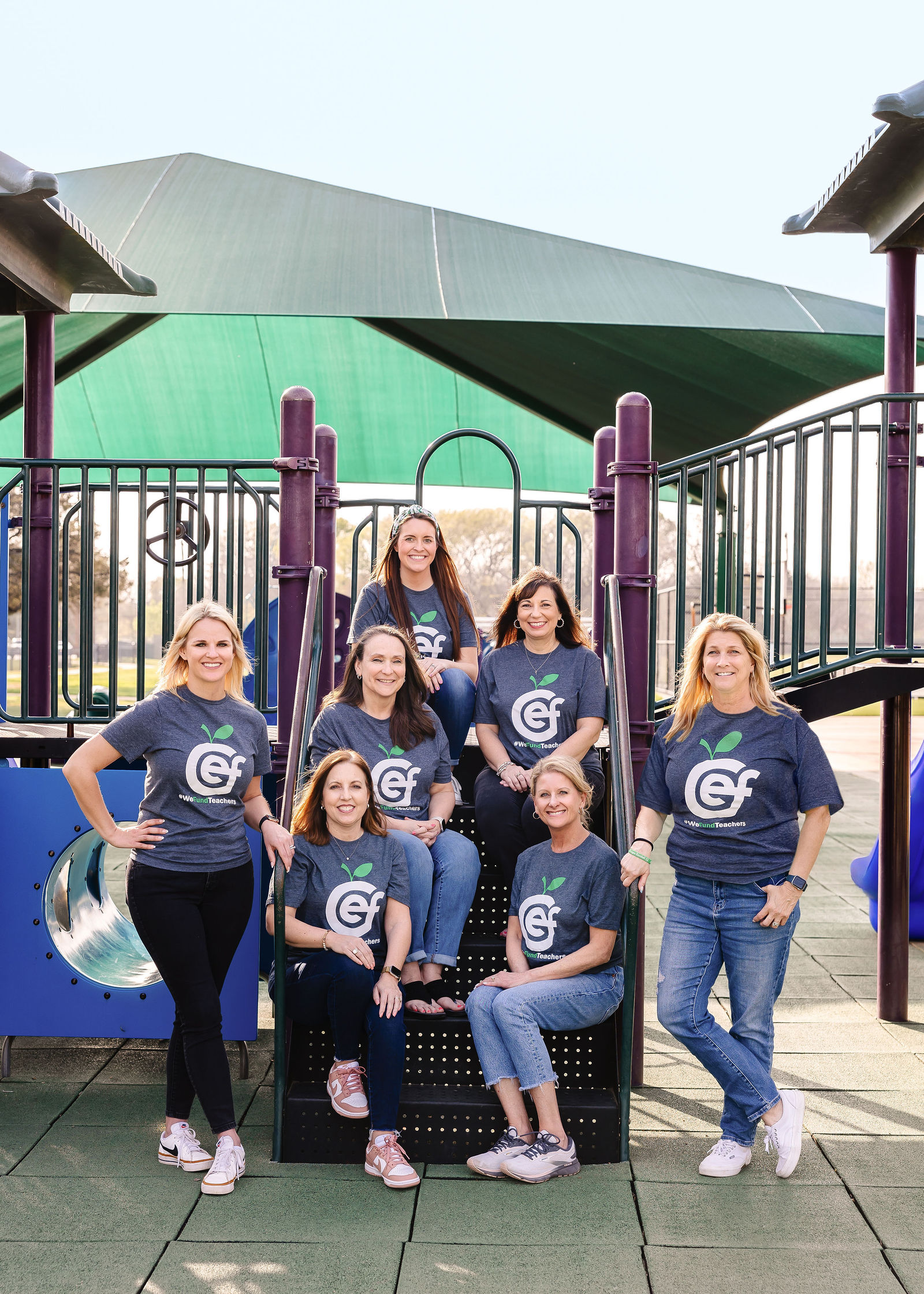
This group portrait was created for The Scout Guide Southlake & Grapevine in Texas and was designed for print publication, meaning the image would remain in circulation for an entire year. Because of the longevity and visibility of the advertisement, consistency throughout the image was especially important.
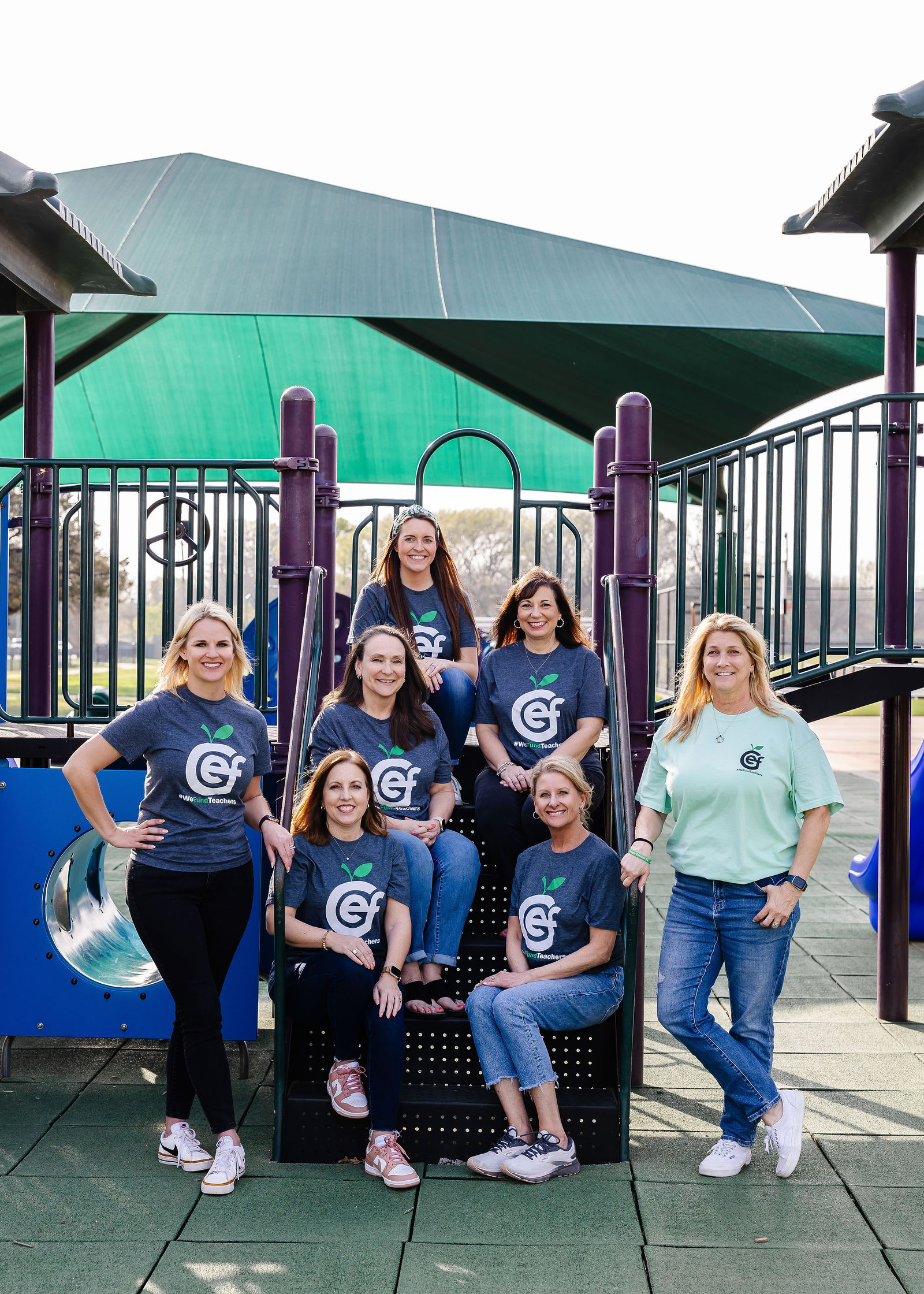
During the shoot, one of the teachers arrived wearing a different t-shirt than the rest of the group. While this may seem like a small detail at first glance, wardrobe inconsistencies become much more noticeable in print advertisements and branded editorial layouts, particularly when the image is intended to represent a cohesive organization or team.
Rather than reshooting the entire group or attempting to recreate the branded shirt separately, the solution became a full digital wardrobe reconstruction in Photoshop.
challenge
The teacher standing on the far right side of the image was wearing a completely different shirt color and style from the rest of the group. Since the image would be featured in print for an extended period of time, the client wanted every subject wearing the same branded t-shirt for visual consistency.
The difficulty was not simply changing the shirt color — it required reconstructing an entirely new shirt that matched the others naturally in lighting, perspective, wrinkles, and fit. Because group portraits contain overlapping body positions, varying fabric folds, and directional sunlight, the edit needed to feel completely invisible to the viewer.
The goal was for no one to ever notice the manipulation had taken place.
approach
To create the replacement shirt, I used the teacher on the far left side of the image as the source reference because her shirt was the most visible and unobstructed. I cloned and transferred portions of her shirt onto the subject on the right, then rebuilt the garment to fit the new body position.
Since the subject was already wearing a t-shirt, her original shirt served as a natural guide for shape, folds, and fabric tension. This made it possible to map the transferred shirt realistically onto her body rather than creating artificial wrinkles from scratch. One of the most important aspects of this edit was restraint. The transferred shirt needed to inherit the natural texture and imperfections of the original garment so it blended seamlessly into the photograph rather than appearing overly polished or artificial.
Using a combination of masking and transformation tools, I carefully reshaped the transferred shirt so it aligned naturally with the perspective, posture, and lighting of the scene.
techniques
- Cloning and rebuilding sections of the original shirt
- Transform and Perspective Warp adjustments
- Liquify refinements for natural fabric shaping
- Opacity and blend mode adjustments to preserve realistic wrinkles and folds
- Masking and edge refinement
- Color correction and tonal balancing
- Removal of minor distractions throughout the image
- Subtle warming and sunlight enhancement to unify the overall scene
result
The final image maintains full wardrobe consistency across the group while preserving the natural appearance of the original photograph. Because the reconstruction followed the subject’s existing body shape, lighting, and fabric movement, the edit remains visually undetectable even in large print.
Projects like this highlight how high-end retouching is often less about dramatic visual effects and more about solving problems invisibly. Whether for editorial publications, advertising campaigns, or branded print materials, the best retouching work is usually the kind viewers never realize happened at all.
Client The Scout Guide Southlake & Grapevine
Industry Luxury Editorial Publication
Usage Annual Print Editorial Feature


